
Understanding the Most Common Compliance Problems — and How to Avoid Them
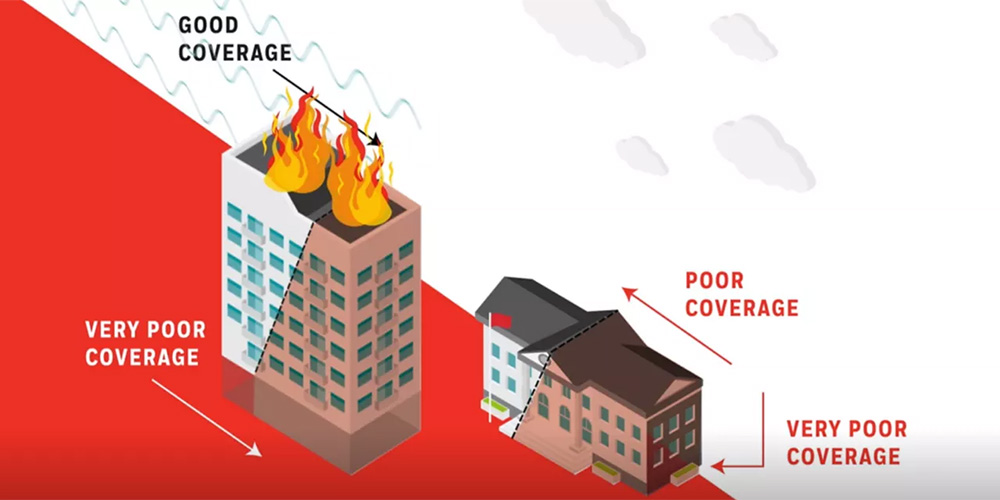
Across Texas, more cities are enforcing Bi-Directional Amplifier (BDA) system requirements to ensure first responders can communicate inside buildings during emergencies. Fire departments rely on radio communications to coordinate fire suppression, rescue operations, and evacuation procedures. When those signals cannot penetrate a building, emergency response becomes significantly more dangerous.
Because of this, municipalities throughout Texas now require BDA testing and, when necessary, signal enhancement systems as part of the life-safety infrastructure of many commercial and multi-family buildings.
Yet a surprising number of properties fail BDA testing the first time they are evaluated.
Understanding why this happens can help building owners, developers, and property managers avoid costly delays, remediation expenses, and compliance issues.
What Is BDA Testing?
BDA testing evaluates whether emergency radio signals used by police, fire, and EMS personnel can reliably reach all areas inside a building.
The test measures signal strength in locations such as:
- stairwells
- basements
- mechanical rooms
- elevator lobbies
- underground parking structures
- interior hallways and units
If signals fall below required thresholds in too many areas, the building may require installation of a signal enhancement system, typically consisting of:
- donor antennas
- amplifiers
- distributed antenna systems (DAS)
- backup power supplies
These systems strengthen public safety radio signals throughout the structure.
Why BDA Testing Matters
Reliable radio communication can determine how effectively emergency responders operate inside a building.
When signals fail:
- firefighters cannot coordinate operations
- rescue teams lose situational awareness
- emergency command structures break down
For that reason, BDA compliance is now viewed as a critical life-safety requirement, not simply a technical upgrade.
The Five Most Common Reasons Buildings Fail BDA Testing, as noted by TXSD Integration
1. Modern Construction Materials Block Radio Signals
Many newer buildings are constructed with materials that significantly reduce radio penetration.
Common signal-blocking materials include:
- low-emissivity glass
- reinforced concrete
- steel framing
- metal roofing
- energy-efficient insulation
These materials improve energy efficiency and structural strength, but they also create barriers for radio communication.
Large apartment complexes, hospitals, and office buildings often experience signal loss deep within the structure.
2. Underground and Interior Spaces
Basements and interior areas are particularly vulnerable to poor radio coverage.
Locations that frequently fail testing include:
- underground parking garages
- stair towers
- mechanical equipment rooms
- storage areas
- elevator shafts
Because these areas are farthest from external radio towers, signals weaken dramatically as they pass through layers of concrete and steel.
3. BDA Planning Was Not Considered During Construction
Many buildings fail testing because BDA requirements were not addressed early in the design phase.
When signal coverage is only evaluated after construction is nearly complete, developers often discover that large areas of the building lack sufficient radio coverage.
At that stage, remediation may require:
- running additional cabling
- installing antenna networks
- modifying ceilings or walls
Addressing signal coverage during the design phase can avoid much of this disruption.
4. Local Code Requirements Vary by Jurisdiction
Texas does not enforce a single statewide BDA standard.
Instead, requirements are typically defined by local jurisdictions and fire departments.
As a result:
- signal strength thresholds may vary
- testing procedures may differ
- documentation requirements may change from city to city
Buildings designed without careful attention to the local authority having jurisdiction (AHJ) can easily miss critical compliance details.
5. Lack of Proper Testing Documentation
Even when signal coverage is adequate, buildings can fail inspection if documentation is incomplete.
Typical documentation requirements include:
- signal strength maps
- testing methodology records
- equipment certifications
- backup power verification
Without proper documentation, inspectors may require additional testing or system verification before approving the building.
The Cost of Failing BDA Testing
TXSD Integration notes that failing BDA testing can create significant consequences for building owners and developers.
Potential impacts include:
- delayed certificates of occupancy
- costly retrofits
- project schedule disruptions
- additional inspection fees
- potential liability exposure
In many cases, remediation work becomes more complex once walls, ceilings, and finishes are already installed.
How Building Owners Can Avoid BDA Failures
TXSD Integration believes that the most effective strategy is to evaluate radio signal coverage early in the project lifecycle.
Best practices include:
- conducting pre-construction signal surveys
- coordinating with local fire authorities
- incorporating BDA infrastructure into initial building design
- performing preliminary signal testing during construction
These steps help identify potential signal deficiencies long before final inspections occur.
The Bottom Line
TXSD Integration knows that reliable radio communication inside buildings is essential for effective emergency response.
As Texas jurisdictions continue strengthening enforcement of BDA requirements, building owners and developers who plan for signal coverage early can avoid costly delays and compliance challenges.
TXSD Integration understands the factors that cause buildings to fail BDA testing and allows projects to move forward with greater certainty, safer environments, and smoother inspections.
For more information and assistance, contact TXSD Integration at 210-348-6611.